
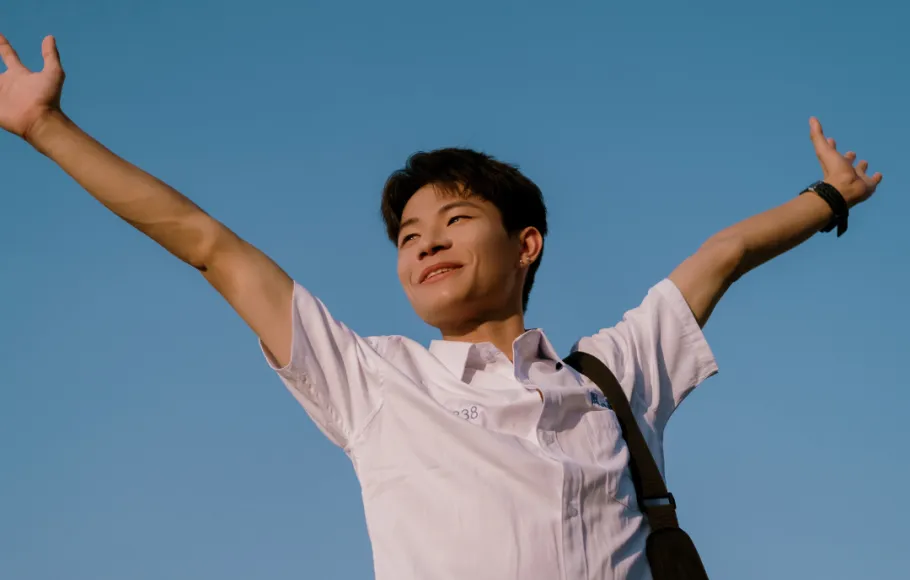
Practice optimism: A necessary exercise
In a daily life where news feeds are constantly present and concerns about the world around us often take up a lot of space, it can be difficult to truly unwind. Many people feel guilty about taking care of themselves when so much in the world is uncertain, or when others are struggling.
That feeling is understandable. It says something about empathy and commitment. At the same time, it can become a mental trap. Because even though recovery can sometimes feel like shirking responsibility, it is in fact a prerequisite for being able to take responsibility over time. Recharging your batteries is not selfish – it is necessary in order to continue to care, engage and function in everyday life.
Resting is not giving up. It is gathering strength. Recovery is not a sign of passivity, but of endurance.
The most important muscle to train
We often talk about physical health, exercise and performance. But in all the focus on external strength, another important ability is easily forgotten: inner resilience. The ability to feel hope, to trust other people and to hold on to the idea that the world can actually develop in a better direction.
Optimism is sometimes dismissed as naivety. In times of unrest, it is rather the opposite. Continuing to believe in humanity's capacity for good, despite adversity, is an active act. And just like physical strength, it requires training.
Training optimism is about where we focus our attention. It is not about turning a blind eye to the difficult things, but about having the strength to stand firm in the face of them. Negative news often gets the most attention, but that does not mean that there are no positive developments. They are just not as visible. Good things happen every day, even when they do not dominate the news flow.
What you can do – for yourself and for others
Strengthening your optimism does not mean denying reality. It is about actively creating balance. Seeking out perspectives, stories and contexts that remind us that the world also has room for cooperation, consideration and progress – and that we ourselves are part of that.
You can start small:
- Actively seek out good news and stories.
- Read books that strengthen your faith in humanity.
- Spend time in nature without any pressure to perform.
- Spend time with people who give you energy.
- See rest as a necessity, not something that must be earned.
It's better than you think
When the news is dominated by crises, conflicts and threats, it's easy to get the feeling that the world is only getting worse. But how accurate is that picture? Below is a short test that challenges common perceptions about the world's development. You'll find the answers further down in the text.
Question 1
What percentage of one-year-olds worldwide are currently vaccinated against any disease?
A) 50% B) 20% C) 80%
Question 2
How many girls aged 6–11 worldwide attend school?
A) Approximately 60% B) Approximately 90% C) Approximately 30%
Question 3
Over the past 20 years, the proportion of people living in extreme poverty has...
A) More than halved B) Remained at roughly the same level C) Almost doubled
Question 3
What has happened to carbon dioxide emissions from the EU and the US since 2005?
A) They have decreased by 20% B) They have increased by 20% C) They have remained unchanged.
Question 4
How much has the global average sea level risen per year over the last 100 years?
A) 20 mm B) 200 mm C) 2 mm
Practising optimism is not about always thinking positively. It is about giving yourself the conditions to cope – mentally, emotionally and in the long term. And it is a skill that can be built, step by step.
Answers
Question 1: C Question 2: B Question 3: A Question 4: A Question 5: C